Seeing Green: The Matcha Craze Brewing in Berkeley
Digital fame made ceremonial matcha a massive market item, but before you rush to buy your next fix, remember that this boom isn’t built to last. Continue Reading
In a world where Amazon reigns supreme for online shoppers, the appeal of sticking to one giant contrasts with the freedom to explore in physical stores. This paradox sheds light on how our shopping habits have shifted, raising questions about the broader impact on consumer choices and the future of retail.Continue Reading
Author: Mitali Srinath, Graphics: Anna Szymoniak The BRB Bottomline: Adidas’ recent partnership with Parley has led consumers to question whether their initiatives are truly sustainable or just for marketing purposes. The “Adidas outbreak” has flooded the UC Berkeley campus with thousands of students sporting the brand as their daily footwearContinue Reading
Macroeconomic theory suggests that without any outside intervention, the macroeconomy will self-adjust and return to its long-run state after short-term shocks. The decision for policymakers thus boils down to a cost-benefit analysis taking into account factors like intertemporality and risk tolerance — they can either wait and allow the economy to adjust organically, or sink resources into actively trying to stabilize the economy, taking on the risk of further destabilizing it.Continue Reading
Downward trends in enrollment have had a ripple effect at institutions across the country. As decreases in enrollment continue, schools are feeling pressure to keep tuition affordable. Although inflation has pushed up the prices of most goods and services, the necessity for more students has incentivized institutions to keep tuition prices relatively low. Continue Reading
Globalization is not new. People have traded goods across oceans and continents since the Silk Road. But this 2,000 year legacy may now be in jeopardy as an increasing number of experts warn that globalization, as we know it, may be coming to an end.Continue Reading
The COVID-19 has, unequivocally, triggered a global crisis comparable in size to historical precedents such as the Great Recession of 2008. While the two may be similar in their ramifications, the current crisis differs significantly from the 2008 crisis. This article discusses noteworthy insights for policymakers and investors alike. Continue Reading
Tapering – the end of quantitative easing – has finally arrived, bringing an epilogue to the era of cheap money. How will tapering impact the economy, and what does it mean for the common public? In this article, Financial Literacy columnist Bradley Tian examines the working and implications of the tapering process. Continue Reading
Furnishing an apartment for the first time doesn’t always have to be a headache! Although the pandemic has made furnishing more difficult and costly, you can improve your experience by planning ahead with a few helpful tips in mind. Continue Reading
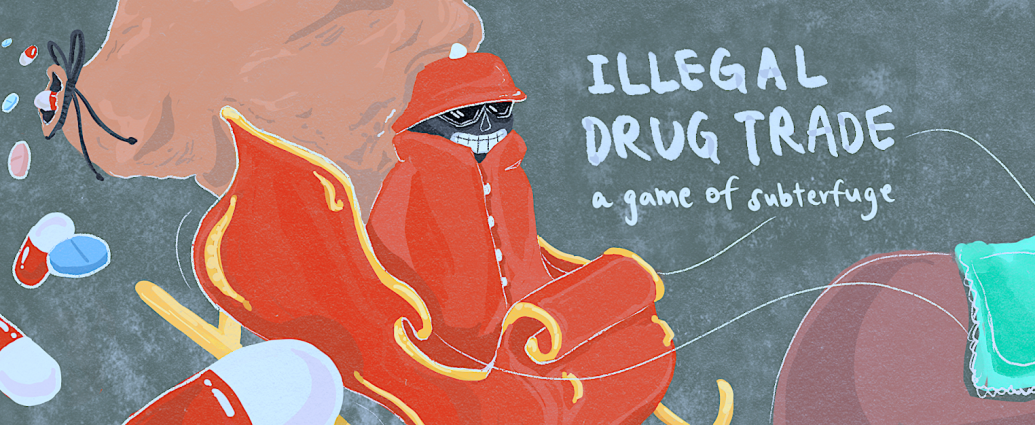
In 1971, President Richard Nixon officially proclaimed a war on drugs. Since then, the United States has spent well over $1 trillion on drug prevention and detainment. “If we cannot destroy the drug menace in America, then it will surely in time destroy us,” Nixon told Congress in 1971. “I am not prepared to accept this alternative.” The goal of the war on drugs is to reduce drug use. The specific aim is to destroy and inhibit the international drug trade — making drugs scarcer and costlier, and therefore making drug habits in the US unaffordable.Continue Reading
We are a student group acting independently of the University of California. All information on this website is published in good faith and for general information purposes only. Business Review at Berkeley does not make any warranties about the completeness, reliability and/or accuracy of this information. The Editorials section features views of the individual authors and do not reflect the position of our organization as a whole or of the greater UC Berkeley community. No article or portion of an article should be construed as providing financial, legal, or political advice. Any action you take upon the information you find on this website is strictly at your own risk. Business Review at Berkeley will not be liable for any losses and/or damages in connection with the use of our website.
Designed using Unos Premium. Powered by WordPress.